
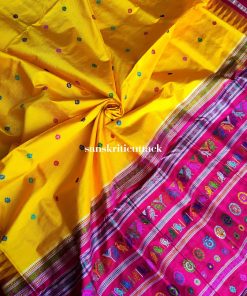
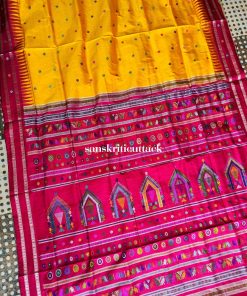
The Dolabedi saree is a traditional handloom saree that originates from the eastern Indian state of Odisha. It is characterized by its intricate designs and elaborate patterns that are woven into the fabric using a combination of jala and dobby weaving techniques. The saree is traditionally made from high-quality tussar silk in the weaving villages of Nuapatna, Sonepur, and Gopalpur, although mulberry silk is used in the Sambalpur region.
The Dolabedi saree is named after the raised platform with an arch that is situated outside the outer compound wall of the main temple. During the Dola Jatra procession, which takes place during the festivities of ‘Dola Purnima’ or ‘Holi’ in the city of Puri, the deities Dolagobinda (Lord Jagannath’s representative Deity), Bhudevi and Sreedevi are taken on this platform.
The Dolabedi saree is a celebration of this grand festival, and its vibrant colors and intricate designs are reminiscent of the procession and the festivity it represents. The saree is highly prized for its quality and craftsmanship, and is often worn at special occasions such as weddings, religious ceremonies, and festivals.
The Dolabedi saree is a testament to the artistry and skill of the weavers in Odisha, who create each saree with utmost care and precision. The weaving process is a time-consuming and intricate one, requiring skilled hands and a keen eye for detail. Each saree is unique and reflects the weaver’s creativity and artistic vision.
The Dolabedi saree is a beautiful and intricate piece of Indian handloom artistry, embodying the essence of the rich cultural heritage of Odisha. It is a symbol of elegance, grace, and tradition, and is highly coveted by saree lovers worldwide.
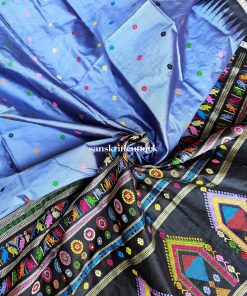
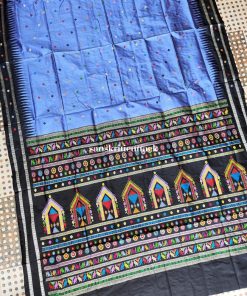
Dolabedi Saree
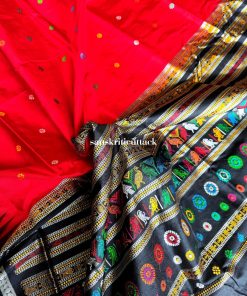
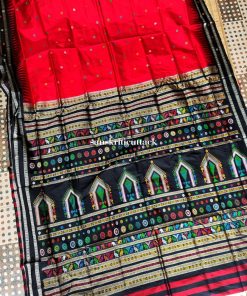
Dolabedi Saree
Dolabedi Saree