
Sarees
Sambalpuri Bandha Saree: Odisha’s Quintessential GI-Tagged Weaving Masterpiece
Introduction: Threads That Carry a Legacy
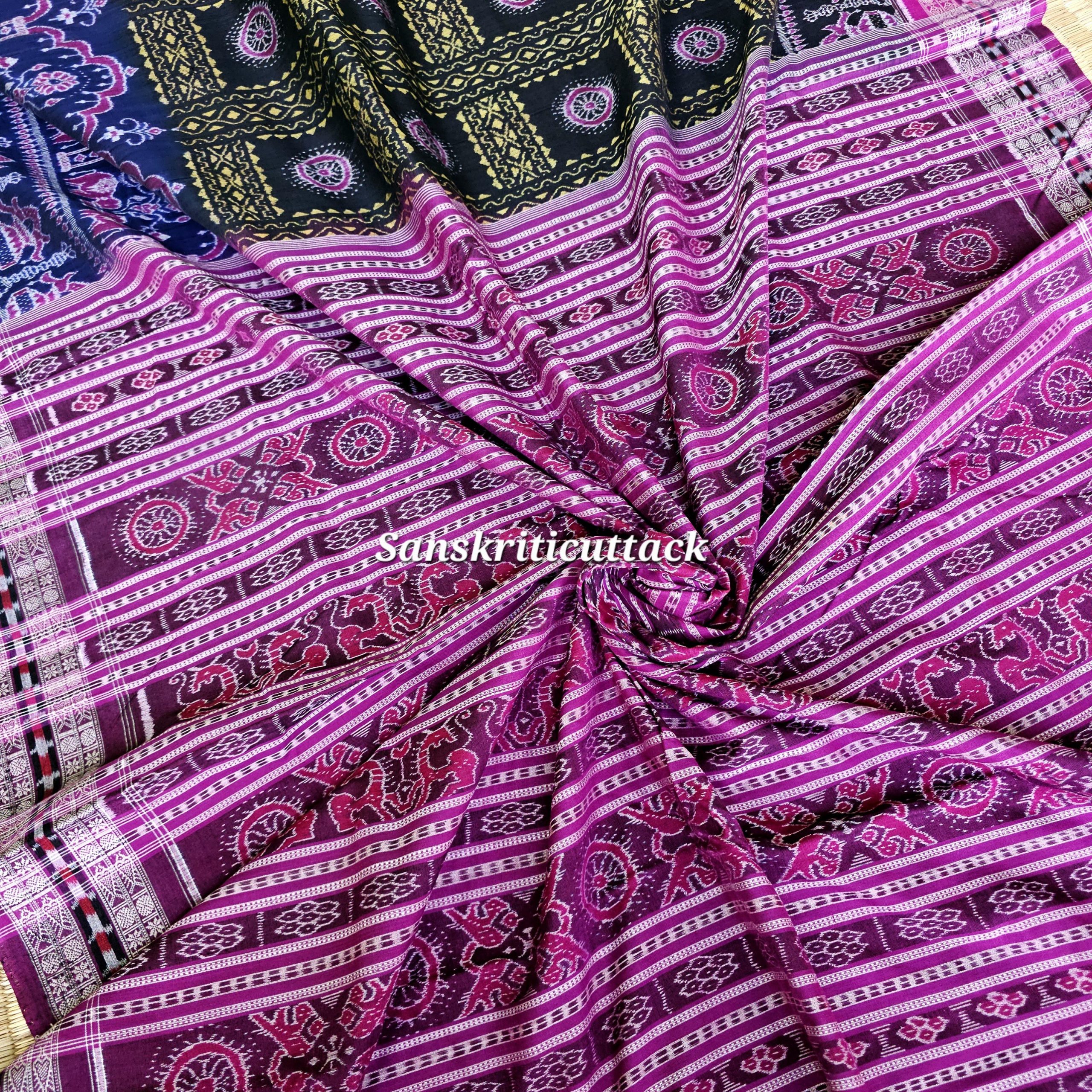
There are garments that adorn the body, and then there are textiles that embody identity, history, and ritual. The Sambalpuri Bandha saree of Odisha belongs to the latter — a weaving tradition so rich that it has earned protected status as a Geographical Indication (GI)-tagged handloom. What makes this fabric special is not just the beauty you see but the centuries of lived experience, mathematical precision, and cultural memory woven into every centimeter.
Recognised officially under the GI registry in 2012, Sambalpuri Bandha sarees elevate handloom from craft to heritage, making them prized possessions for collectors, connoisseurs, and fashion lovers alike.
What Is Sambalpuri Bandha? The Weave Behind the Name
Often simply referred to as “Sambalpuri saree,” the Sambalpuri Bandha refers to a specific style of double–sided ikat weaving indigenous to western Odisha, particularly in districts like Sambalpur, Bargarh, Sonepur, Balangir, and Boudh.
Unlike printed or embroidered fabrics, the Sambalpuri Bandha creation process is an expression of extreme craftsmanship:
-
Thread Before Textile: Skilled weavers calculate and prepare the design in the yarn itself by tying (resist-dying) specific sections of warp and weft threads before any weaving begins.
-
Colour Layering: These tied threads are repeatedly dyed with vibrant, rich hues until striking colours are achieved.
-
Weaving with Precision: Once the design is embedded in the yarn, the loom brings the pattern to life — and the motifs on a true Sambalpuri Bandha saree appear perfectly on both sides of the fabric.
This meticulous tie-dye-then-weave method — locally called Bandha Kala — is what distinguishes Sambalpuri Bandha from any regular handloom or machine-made saree, creating reversible designs that are impossible to replicate with surface treatments or digital printing.
Origins and Evolution: A Weaving Tradition Rooted in Time
The origins of Sambalpuri Bandha stretch back to the early handloom traditions of Odisha, where weaving was both livelihood and cultural expression. Though exact historical records are sparse, archaeologists and textile historians suggest Odisha’s handloom practice existed long before the medieval period. Over time, tie-and-dye weaving evolved into the sophisticated Sambalpuri ikat we know today, largely through the refinement of resist-dye techniques and motifs reflective of local cosmology and environment.
The saree’s popularity soared nationally in the late 20th century when influential figures — including former Indian Prime Minister Indira Gandhi — showcased these weaves on public platforms. Their elegant patterns and vibrant colours caught the imagination of pan-Indian audiences, helping Sambalpuri Bandha transcend regional boundaries.
Iconic Motifs and Cultural Symbolism
The visual language of Sambalpuri Bandha is rooted deeply in Odisha’s cultural fabric. Every motif has meaning:
-
Shankha (Conch): Representative of auspicious beginnings and spiritual resonance in Hindu ceremonies.
-
Chakra (Wheel): Symbolises eternal motion, cosmic order, and divine continuity.
-
Phula (Flower): A tribute to nature’s eternal bloom and life cycles.
-
Animal and geometric forms: Echo tribal interpretations of harmony between humankind and the natural world.
These motifs aren’t surface decoration — they are woven into the structural DNA of the saree, a testament to the weaver’s skill.
Cotton vs. Silk: Crafting for Function and Occasion
While Sambalpuri Bandha began predominantly as a cotton fabric suited for everyday wear in Odisha’s warm, humid climate, the craft seamlessly transitioned into the luxurious realm of silk over time. Today, both cotton and silk versions command respect:
Cotton Sambalpuri Bandha:
-
Lightweight, breathable, and perfect for everyday use.
-
Highly valued by textile lovers who appreciate comfort without compromising artistry.
-
Ideal for office wear, daytime functions, and cultural gatherings.
Silk Sambalpuri Bandha:
-
Richer drape and lustre, befitting weddings, festivals, and ceremonial contexts.
-
Often woven with deeper contrasts and more elaborate motifs.
-
Requires careful handling (like shade drying and gentle dry-cleaning) due to silk’s delicate nature.
Whether cotton or silk, the handloom quality and method — tie-dying and double ikat — remains the same, cementing the garment’s status as tradition and luxury intertwined.
Why GI Tag Matters: Protecting Heritage, Empowering Weavers
The Geographical Indication (GI) tag is more than a label — it is a legal recognition that protects the identity of a craft tied to a specific place. For Sambalpuri Bandha sarees, the GI tag does three key things:
-
It safeguards authenticity against imitations and mass-produced replicas.
-
It sustains artisan livelihoods by ensuring fair recognition of origin.
-
It protects weaving techniques that have evolved through generations and might otherwise vanish under industrial pressure.
As markets expand and demand for authentic handlooms grows, the GI tag becomes a trust signal for buyers, especially those searching online for genuine Sambalpuri Bandha sarees.
How to Identify an Authentic Sambalpuri Bandha Saree
Spotting an original Sambalpuri Bandha saree requires more than a trained eye — it needs knowledge of weaving logic:
-
Identical Designs on Both Sides: Genuine Bandha ikat displays the same pattern front and back. Fake or printed versions generally don’t.
-
Reversible Motifs: The finish on both sides should be crisp and clear.
-
Natural, Rich Hues: Handloom dyes tend to be rich but not glaring; overly glossy or unnatural brightness can be a red flag.
-
Textured Weave: Authentic handloom feels textured and layered, unlike flat power-loom fabrics.
-
Justifiable Price: Since each saree takes weeks of labor, genuine pieces naturally command a higher price.
These checks protect buyers and honour the painstaking effort of artisans.
Styling and Modern Relevance
Sambalpuri Bandha sarees have effortlessly transitioned from traditional wardrobes to contemporary wardrobes. Fashion enthusiasts pair them with oxidized silver jewellery for ethnic charm, blend them with modern blouses for fusion aesthetics, or even repurpose them into blazers, skirts, and jackets for global boho looks.
The saree’s adaptability makes it relevant not only in Odisha but on catwalks, cultural programs, college festivals, and formal occasions across India.
Why Sambalpuri Bandha Defines Sustainable Luxury
In a world dominated by fast fashion, the Sambalpuri Bandha saree reminds us that true style is timeless and conscientious. Each piece is not a product — it is the culmination of knowledge, labour, ancestral skill, and community livelihood. When you wear one, you wear a legacy.
Frequently Asked Questions (FAQ) About Sambalpuri Bandha Sarees
1. What is a Sambalpuri Bandha saree?
A Sambalpuri Bandha saree is a traditional handwoven saree from western Odisha created using the tie-and-dye resist technique known as “Bandha.” The design is dyed into the yarn before weaving, which makes the motifs visible on both sides of the fabric. It is a GI tagged handloom product that represents Odisha’s textile heritage.
2. Is Sambalpuri saree the same as Ikat?
Sambalpuri saree is a type of Ikat, but not all Ikat sarees are Sambalpuri. Ikat is a broader weaving technique practiced in different regions of India and the world. Sambalpuri Bandha refers specifically to the GI-tagged weaving clusters of Odisha known for precise double-sided designs and traditional motifs.
3. How can I identify an original Sambalpuri Bandha saree?
You can identify an authentic Sambalpuri Bandha saree by checking:
-
The design appears clearly on both sides
-
Slight irregularities that indicate handloom weaving
-
Crisp motif alignment
-
Textured fabric feel
-
Transparent sourcing or GI certification
Avoid sarees that look printed or too mechanically perfect.
4. What is the difference between Sambalpuri cotton and silk sarees?
Sambalpuri cotton sarees are lightweight, breathable, and suitable for daily or office wear. Sambalpuri silk sarees have a richer drape and shine, making them ideal for weddings and festive occasions. Both use the traditional Bandha technique, but silk versions are generally more expensive due to material cost and weaving time.
5. Why is the Sambalpuri saree GI tagged?
The Geographical Indication (GI) tag protects Sambalpuri sarees from imitation and ensures they are produced in specific regions of Odisha using traditional techniques. It safeguards artisan livelihoods and preserves the authenticity of the weave.
6. How long does it take to weave a Sambalpuri Bandha saree?
Depending on the complexity of the design, a Sambalpuri Bandha saree can take anywhere from 7 days to several weeks. Intricate double ikat patterns require careful calculation and repeated dyeing before weaving even begins.
7. What are the common motifs used in Sambalpuri sarees?
Traditional Sambalpuri motifs include:
-
Shankha (conch)
-
Chakra (wheel)
-
Phula (flower)
-
Geometric tribal patterns
These motifs carry cultural and spiritual significance rooted in Odisha’s heritage.
8. Are Sambalpuri sarees suitable for weddings?
Yes. Sambalpuri silk sarees with elaborate borders and rich colours are highly suitable for weddings and formal events. Cotton versions are more appropriate for cultural gatherings, office wear, or casual occasions.
9. Why are authentic Sambalpuri sarees expensive?
Authentic Sambalpuri Bandha sarees involve time-intensive handloom weaving, precise dyeing techniques, and skilled artisan labor. The cost reflects craftsmanship, not mass production.
10. Where can I buy authentic Sambalpuri Bandha sarees online?
You should purchase from trusted sellers who clearly mention GI authenticity, weaving origin, and handloom certification. Always verify product descriptions and seller transparency before buying.
Conclusion: More Than a Saree — A Living Heritage
The Sambalpuri Bandha saree stands apart from trends because it is not trying to be timeless — it always was. Its beauty lies in its discipline: the dye before the weave, the motifs before the mode, the artisan’s heart before the hem.
This is why, for lovers of heritage textiles and seekers of authenticity, the Sambalpuri Bandha saree remains not just desirable but indispensable.
