
Sarees
Vibrant Cotton Sarees of Odisha: Sambalpuri, Bomkai, Kotpad & Rare Tribal Weaves
If you visit a weaving village in Odisha early in the morning, you won’t first notice the colors.
You’ll hear the rhythm.
The wooden shuttle striking the loom.
The measured pull of dyed threads.
The quiet calculation of a weaver aligning patterns that were tied weeks before weaving even began.
The vibrant cotton sarees of Odisha are not simply garments. They are engineered by hand, memorized by muscle, and perfected over generations. Each region of Odisha has evolved its own weaving grammar — ikat mathematics in Sambalpur, sacred single ikat in Nuapatna, extra weft artistry in Bomkai, vegetable dye alchemy in Kotpad, and revival craftsmanship in Habaspuri.
Let’s walk through them — not as products, but as living traditions.
Sambalpuri Cotton Sarees – Where Mathematics Meets Art
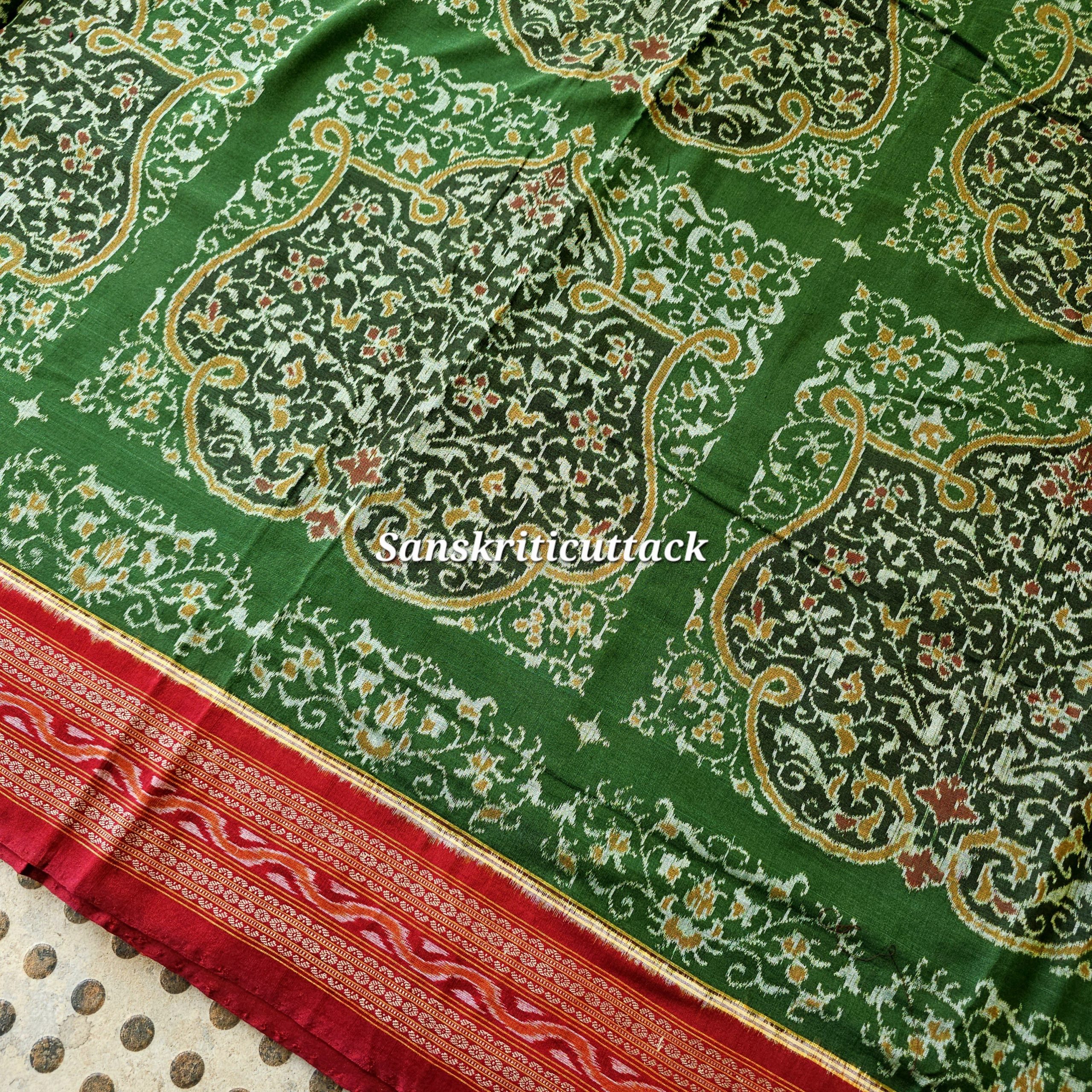
In western Odisha, particularly in Sambalpur and Bargarh, the word “Bandha” carries weight. It means tying — but in textile terms, it represents one of India’s most intellectually demanding weaving techniques.
A Sambalpuri ikat cotton saree begins long before it touches the loom. The yarn is first carefully tied and resist-dyed in sections. The weaver must mentally calculate how the dyed threads will align once woven. If even one bundle is miscalculated, the motif distorts.
This is why authentic Sambalpuri Cotton Sarees display near-perfect symmetry on both sides of the fabric — because the design exists within the yarn, not on top of it.
Traditional motifs include:
-
Shankha (conch)
-
Chakra (wheel)
-
Phula (flower)
-
Temple borders
These are not decorative accidents. They reflect Odisha’s spiritual vocabulary.
👉 Find Your Perfect: Sambalpuri Cotton Sarees
What sets Sambalpuri apart in the world of Odisha handloom cotton sarees is precision. It is wearable geometry — vibrant yet disciplined.
Nuapatna Ikat Sarees – Sacred Threads of Cuttack
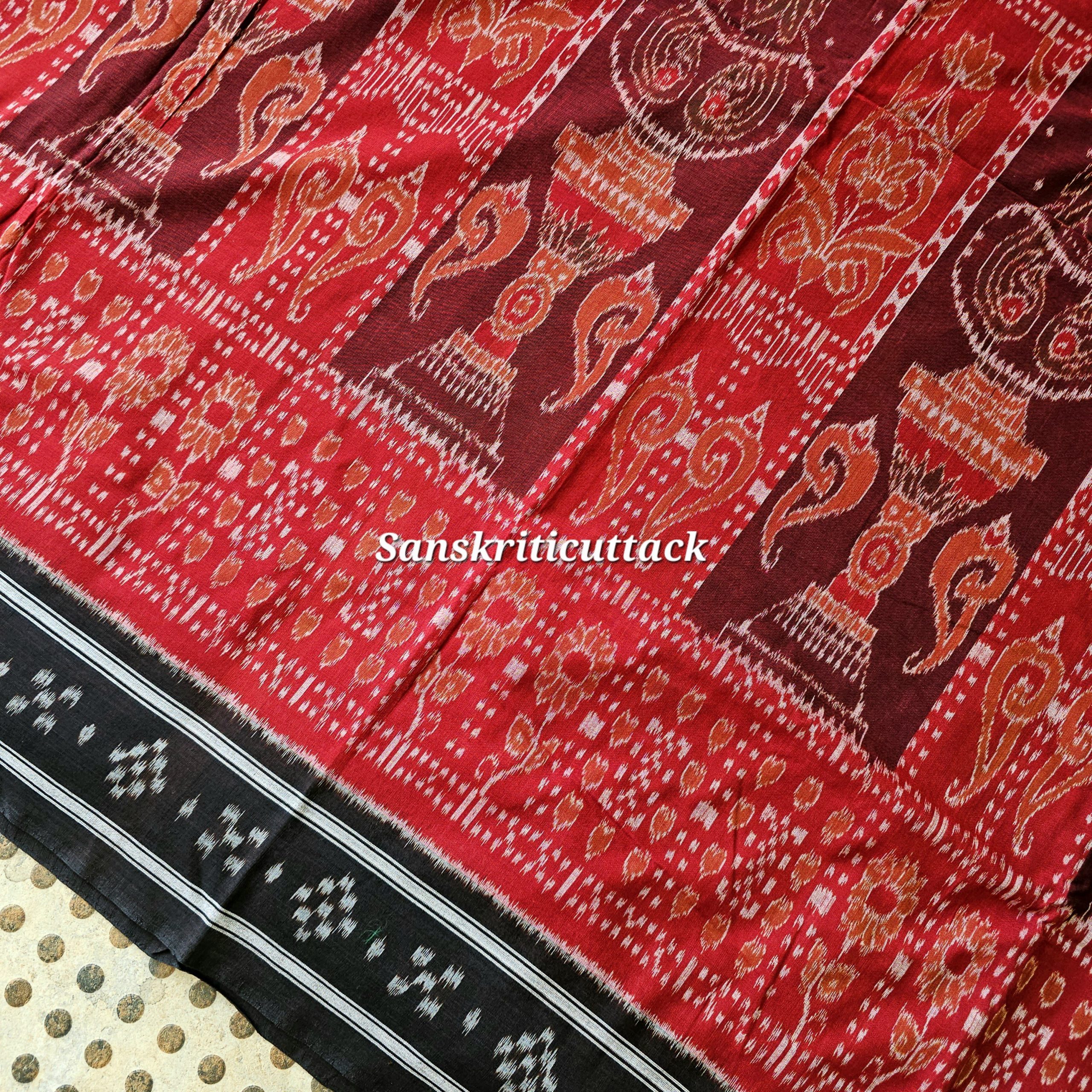
In Nuapatna village near Cuttack, weaving has long been associated with temple tradition. Historically, fabrics from this region were offered to Lord Jagannath in Puri.
Unlike Sambalpuri double ikat, a Nuapatna single ikat saree typically uses either warp or weft resist-dyeing — not both. This results in softer motif alignment and a lighter visual density.
Color combinations traditionally revolve around red, black, and white — tones deeply embedded in Odisha’s ritual symbolism.
The beauty of Nuapatna Ikat Sarees lies in their restraint. They are less about dramatic contrast and more about spiritual subtlety.
👉Experience the Elegance of: Nuapatna Ikat Sarees
For buyers seeking authentic traditional cotton sarees of Odisha with cultural roots, Nuapatna offers depth beyond design.
Bomkai Cotton Sarees – The Extra Weft Signature
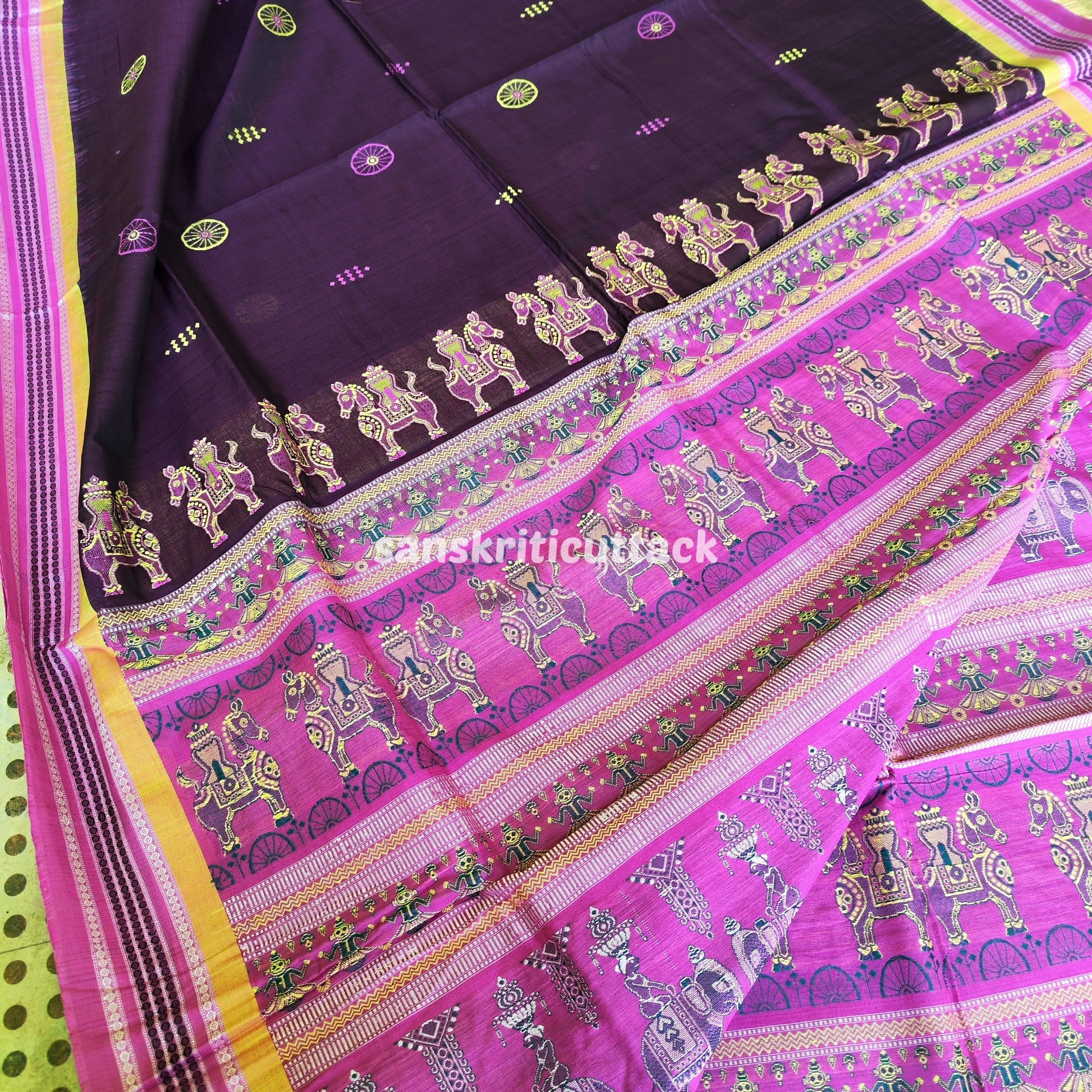
If Sambalpuri is geometry, Bomkai is texture.
Originally from Bomkai village in Ganjam district and later developed in Sonepur, the Bomkai extra weft saree combines ikat techniques with an additional decorative process.
During weaving, extra threads are manually inserted into the weft to create raised motifs — particularly on the pallu and border. This technique demands extreme control because the extra thread must not distort the base weave.
The result? A pallu that appears embroidered but is entirely woven.
Motifs often include:
-
Fish (prosperity)
-
Lotus (purity)
-
Tribal geometries
-
Temple patterns
Authentic Bomkai Cotton Sarees balance minimal body design with richly detailed pallus.
👉 Link here: Bomkai Cotton Sarees
Among vibrant cotton sarees of Odisha, Bomkai stands out for its structural artistry.
Kotpad Cotton Sarees – Dyed by the Forest
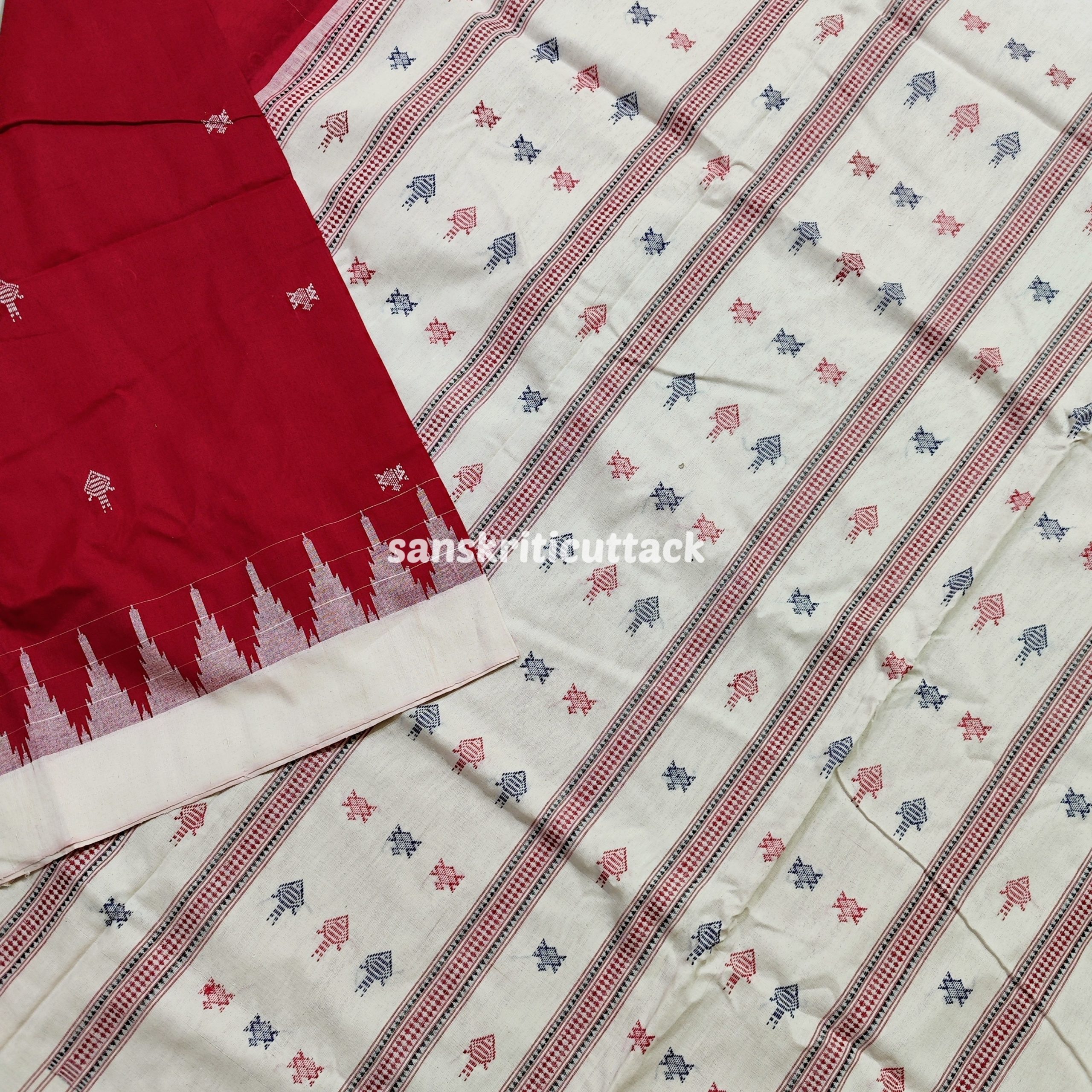
Travel south to Kotpad village in Koraput district, and the story changes completely.
Here, the Mirgan tribal community weaves coarse cotton yarn dyed using roots of the aal tree. The process is slow, organic, and chemical-free.
The deep maroon, rust, and earthy brown shades are not factory-created colors. They are the result of boiling yarn in natural dye solutions for hours, sometimes days.
A Kotpad natural dyed saree is heavier, more textured, and deeply sustainable.
Unlike urban ikat precision, Kotpad Cotton Sarees celebrate imperfection — slight irregularities that signal authenticity.
👉Discover Our Impressive: Kotpad Cotton Sarees
Kotpad is also one of Odisha’s GI-tagged handloom traditions, reinforcing its geographical and cultural identity.
Habaspuri Cotton Sarees – The Weave That Nearly Disappeared
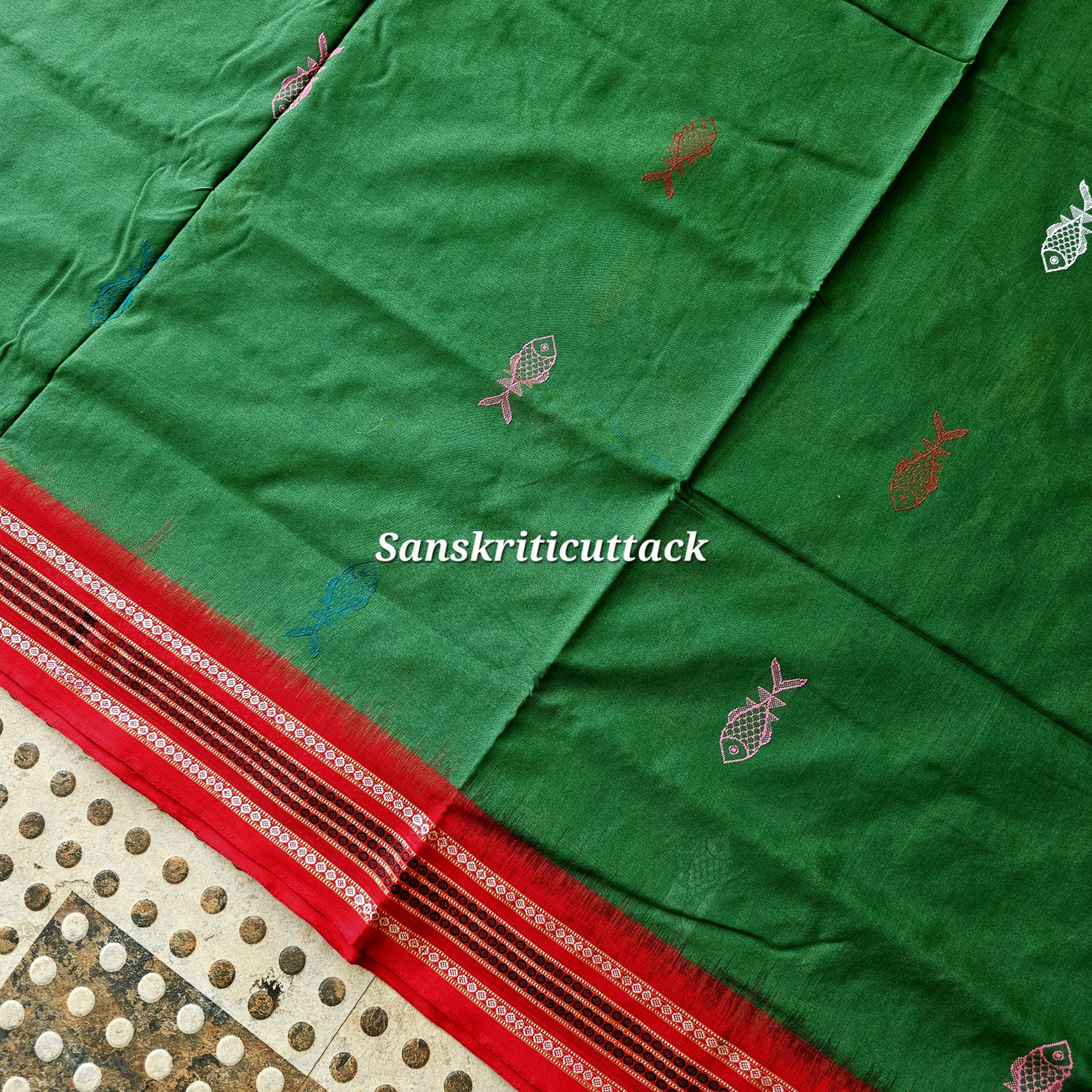
Not every textile story is continuous. Some nearly end.
Habaspuri weaving from Kalahandi district once thrived among tribal communities but faced decline due to industrialization and economic shifts. For years, the craft was on the brink of extinction.
Its revival required government intervention, artisan training, and sustained support.
A Habaspuri handloom saree is identifiable by its structured borders, kumbha (temple) motifs, and fish patterns. The weave is firm yet breathable — designed for durability.
👉Explore Our: Habaspuri Cotton Sarees
Today, Habaspuri represents something larger than fashion. It represents resilience.
Why Odisha Cotton Sarees Command Global Respect
Unlike many mass-produced textiles, authentic handwoven sarees from Odisha require:
-
Pre-dye planning before weaving
-
Manual loom alignment
-
Regional dye knowledge
-
Motif memory passed through generations
A single ikat saree can take weeks. A complex Bomkai pallu may require multiple stages of loom adjustment.
These are not assembly-line fabrics.
They are cognitive crafts.
When people search for vibrant cotton sarees of Odisha, they are often looking for color. But what they receive — when buying authentic handloom — is heritage encoded in cotton.
Frequently Asked Questions About Odisha Cotton Sarees
What makes Sambalpuri sarees different from other ikat sarees?
Sambalpuri sarees use intricate bandha techniques with symmetrical precision, often employing double ikat methods.
Are Kotpad sarees truly natural dyed?
Yes. Traditional Kotpad weaving uses vegetable dyes extracted from aal tree roots.
What is the extra weft technique in Bomkai sarees?
Extra weft involves manually inserting additional threads during weaving to create raised decorative motifs.
Is Habaspuri weaving revived today?
Yes. With artisan and government support, Habaspuri handloom has regained recognition and GI protection.
Final Reflection
In a world dominated by machine prints and fast fashion, Odisha’s cotton sarees remain timeless. Whether it’s the geometric brilliance of Sambalpuri, the sacred elegance of Nuapatna, the decorative richness of Bomkai, the earthy sustainability of Kotpad, or the revived pride of Habaspuri — each weave tells a story worth preserving.
Sambalpuri teaches precision.
Nuapatna preserves devotion.
Bomkai celebrates craft layering.
Kotpad honors nature.
Habaspuri proves revival is possible.
If you truly want to wear heritage, explore these authentic weaves and support the artisans who keep Odisha’s textile legacy alive.
- Odisha handloom cotton sarees
- Sambalpuri ikat cotton saree
- Bomkai extra weft saree
- Kotpad natural dyed saree
- Nuapatna single ikat saree
- Habaspuri handloom saree
- GI tagged sarees of Odisha
- traditional cotton sarees of Odisha
- handwoven sarees from Odisha
